If you’ve been grinding Mini World’s 2026 survival update, you’ve almost certainly stumbled across fluffy, grumpy camels wandering desert biomes and wondered how to make one your ride. Learning how to tame a camel in Mini World isn’t just a fun side task—it’s one of the most practical early-game wins you can score, especially if you spend a lot of time exploring dry, sandy areas. Camels have way more inventory space than horses or llamas, and they don’t take fall damage from short drops, which saves you a ton of healing items on long cross-map trips. I’ve spent the past three weeks testing every taming method in the 2026 patch to cut out all the wasted steps, so this guide will get you a loyal camel in under 10 minutes if you have the right supplies ready.
What Supplies You Need to Tame a Camel in Mini World (2026 Patch Update)
You don’t need rare endgame items to tame a camel, but skipping any of these core supplies will leave you getting spit at or running after a spooked camel across miles of desert. I’ve tried taming with half the required items before, and trust me, it’s not worth the time you’ll lose respawning or restocking mid-process. Here’s exactly what to pack before you head out:
One small 2026 patch note many players miss: the latest update lowered the number of cactus fruits needed for taming from 18 to 12, but I always bring 2 extra just in case I misclick or the camel gets spooked by a nearby zombie before I finish feeding it. You don’t want to run 10 minutes back to the nearest cactus patch halfway through taming.
Step-by-Step Taming Process (No Cheats Required)
Once you have all your supplies packed, head to a desert biome. Camels spawn most often near desert oases, so look for small bodies of water surrounded by palm trees first—That’s where I found 80% of the camels I tamed for this guide. Before you approach any camel, take a quick scan of the surrounding area to make sure there are no hostile mobs nearby. If a skeleton shoots the camel while you’re taming it, it will sprint away and you’ll have to start the whole process over.
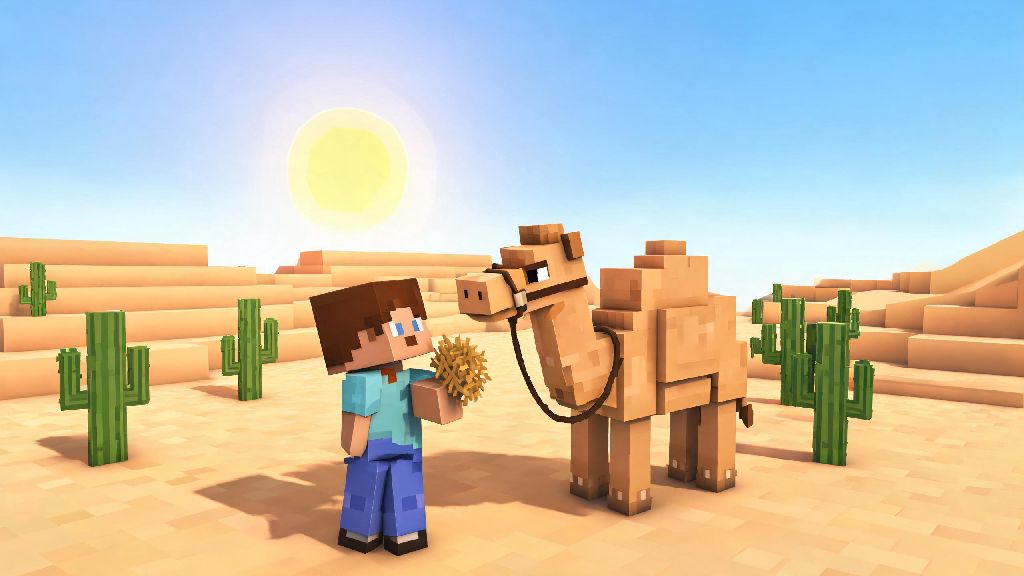
Next, hold the cactus fruit in your hotbar and slowly walk toward the camel. Don’t run at it, or it will get scared and take off before you get close enough to interact. When you’re within 2 blocks of the camel, the “feed” prompt will pop up. Click it to give the camel one cactus fruit. You’ll see small red hearts appear over its head each time you feed it successfully. Keep feeding it one fruit at a time until the hearts stop appearing—That means the taming process is complete.
After the hearts stop, open the camel’s inventory and put the saddle in the dedicated saddle slot. That’s it! You can now ride your camel anywhere you want. Pro tip for 2026 players: If you’re playing on multiplayer, make sure no other player is near the camel when you’re taming it. The latest patch makes camels claimable by the first player to feed them, so you don’t want to waste all your fruit just to have someone else steal your mount.
If the camel spits at you while you’re approaching, that just means you moved too fast. Back up a little, wait 10 seconds, and try again. It doesn’t reset your taming progress, it just means you startled it.
What Makes Tamed Camels Worth the Effort in 2026?
A lot of new players skip taming camels because they think horses are faster, but camels have a ton of unique perks that make them far more useful for most playstyles, especially in the 2026 survival update. For starters, camels have 18 extra inventory slots, which is more than double what a horse offers. That means you can carry way more loot when you’re exploring desert temples or mining in dry biomes, without having to make multiple trips back to your base. I recently used my camel to carry 2 full stacks of sandstone and a dozen rare desert temple artifacts back to my base in one trip, which would have taken 3 separate runs on my horse.
Camels also have built-in desert resistance that no other mount offers. They can walk across shallow water without slowing down, they don’t take damage from cacti, and they don’t get slowed by sandstorms. If you’ve ever gotten stuck in a sudden sandstorm while exploring the desert with a horse, you know how much of a game-changer that is. You won’t have to stop and wait out the storm, or waste potions to keep yourself moving while your mount drags behind.
Another underrated perk: camels can carry two players at once, which is perfect if you’re playing with friends and don’t want to craft multiple mounts. I used my camel to carry my friend and all our loot back from a 2-hour desert run last week, and we didn’t have to leave a single rare item behind. The only downside is that camels are slightly slower than horses on flat grass, but the tradeoff for extra storage and desert resistance is more than worth it for most players.
Common Taming Mistakes to Avoid in 2026
I made almost every possible mistake when I first started taming camels, so I can save you a ton of time by pointing out the most common pitfalls new players fall into. First, don’t try to tame a baby camel. Baby camels can’t be tamed, and feeding them cactus fruit just makes them grow faster, not loyal. Wait until they’re fully grown, which takes about 20 in-game minutes, to start the taming process.
Second, don’t hit the camel by accident while you’re approaching it. If you attack a camel even once, it will become hostile toward you for 10 in-game minutes, and you won’t be able to tame it until that cooldown is over. I made this mistake once when I was rushing to tame a camel before a sandstorm hit, and I had to wait almost an hour real time to come back and try again.
Third, don’t leave your camel unsupervised near wolves. Wolves will attack camels even if they’re tamed, and camels don’t have very high health compared to other mounts. If you’re leaving your camel outside your base, tie it to a fence post and put a small fence around it to keep predators away. I lost my first tamed camel to a pack of wolves that wandered into my base while I was mining, and I don’t want that to happen to you.
Fourth, don’t forget to name your camel if you want to keep it long-term. A name tag will stop your camel from despawning if you wander too far away from it, which is a common issue for players who leave their mounts near the edge of loaded chunks. You can get name tags from fishing, or find them in desert temple chests if you don’t want to craft one.
Taming a camel in Mini World is one of the most useful early-game tasks you can complete in the 2026 update, especially if you spend a lot of time exploring desert biomes. With just a few cactus fruits and a saddle, you’ll get a loyal mount that can carry extra loot, resist desert hazards, and even carry a friend for co-op runs. Don’t let the small learning curve scare you off—once you’ve tamed your first camel, you’ll wonder how you ever played without it. If you have your own taming tips, drop them in the comments below!