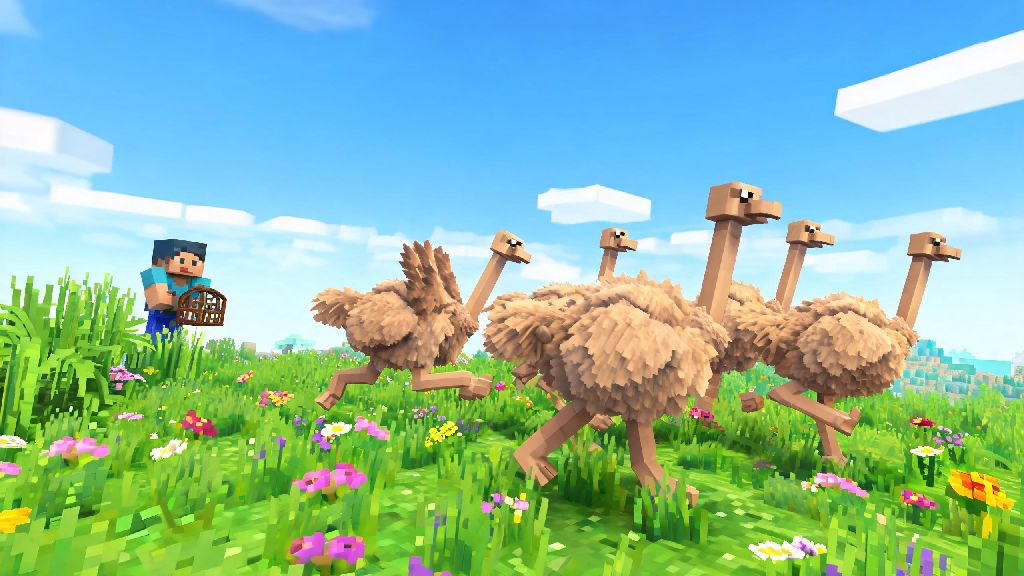
If you’ve spent any time exploring the 2026 update of Mini World’s open savanna biomes, you’ve probably spotted those fast, fluffy ostriches darting across the grass, and wondered how to get one as your own mount. Learning how to tame an ostrich in Mini World is one of the most useful early-game goals you can set, since these birds are faster than most beginner mounts and can even carry small storage pouches for extra loot on long trips. I’ve tested every taming method added in the 2026 patch, so I’ve broken down exactly what works, what doesn’t, and how to skip the common mistakes that cost new players hours of wasted effort.
Pre-Tame Prep: All Items You Need for a Successful Ostrich Tame
The 2026 update overhauled most creature taming mechanics, so old methods that used wheat or apples for ostriches no longer work. Before you head out to the savanna, gather all these items first to avoid having to run back to base mid-process. I keep a pre-packed taming kit in my storage chest at all times now, so I can grab it whenever I spot a rare ostrich variant while exploring.
If you’re playing on a multiplayer server, you might also want to bring a friend to keep an eye out for hostile mobs while you focus on taming. Lions and hyenas spawn frequently in savanna biomes, and they’ll attack both you and the ostrich if you don’t stay alert. I’ve had a lion interrupt a tame halfway through once, and I lost both the ostrich and 8 pieces of millet I’d already fed it, so it’s worth taking the extra precaution.
How to Find and Select the Best Ostrich for Your Needs
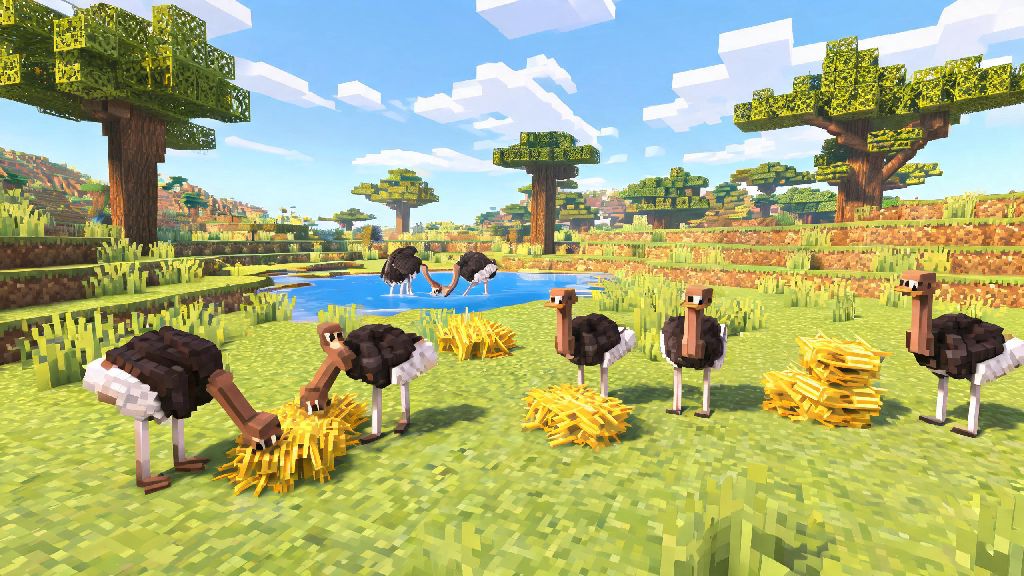
Ostriches only spawn in dry, flat savanna biomes, so you won’t find them in forests, deserts, or tundra areas. Look for open grasslands with scattered acacia trees, that’s where spawn rates are highest in the 2026 update. Avoid ostriches that are already running away from something, whether that’s a hostile mob or another player, since they’re already spooked and will be far harder to calm down.
There are three different ostrich variants, each with unique perks, so pick one that matches what you plan to use it for. Black-feathered ostriches are the fastest, with a top speed of 14 blocks per second, making them perfect for exploring large areas quickly. Brown-feathered ostriches have the most extra storage slots, with space for up to 6 additional item stacks when you add pouches, so they’re ideal for hauling building materials or mining loot. White-feathered ostriches have the highest health, with 20 full hearts, so they’re the best choice for players who often travel through dangerous biomes with lots of hostile mobs.
You can only tame fully grown ostriches, so don’t waste your millet on baby ostriches. Baby ostriches will follow adult ones around, but they won’t accept taming items until they reach full size after 3 in-game days. I usually mark spots where I see baby ostriches with a torch, then come back a few days later to tame them once they’re grown.
Step-by-Step Process for How to Tame an Ostrich in Mini World (2026 Updated)
Once you have your items and found the right ostrich, follow these steps exactly to avoid spooking it. The 2026 update removed random taming failure, so if you follow these steps correctly, you’ll have a tamed ostrich in 5 minutes or less, no luck required.
First, approach the ostrich slowly, walking instead of running, and don’t jump while you’re near it. Sudden movements will scare it off immediately. Crouch when you’re within 10 blocks of the ostrich, and hold the ripe savanna millet in your main hand. If the ostrich starts lowering its head and walking toward you, that’s a good sign it’s interested in the food. If it lifts its wings and hisses, back off 2 blocks and wait 30 seconds before trying to approach again.
If you’re having trouble keeping the ostrich in one spot, place your two wooden fences in a V shape behind it so it can’t run backwards. It will still be able to move forward, but it will stay in place long enough for you to feed it the millet. Don’t feed the ostrich too fast—wait for small pink heart particles to pop up after each piece of millet before you feed it the next one. If you give it more than one piece every 3 seconds, it will get overwhelmed and run away, and you’ll have to start over.
After you’ve fed it 12 to 15 pieces of millet, you’ll see a big burst of bright pink hearts around the ostrich, which means it’s fully tamed. Right click on it with the leather ostrich saddle to equip it, and you’ll be able to ride it immediately. If you’re still struggling with the process, try practicing on a brown-feathered variant first, since they’re calmer and less likely to run off when you make small mistakes.
Post-Tame Care and Tips to Get the Most Out of Your Ostrich Mount
Once you’ve tamed your ostrich, there are a few extra steps to make sure it stays safe and useful for all your adventures. First, name your ostrich using a name tag as soon as possible, to prevent it from despawning when you’re more than 50 blocks away. You can craft name tags with 1 paper and 1 iron ingot, or find them in savanna village chests.
You can add extra storage space to your ostrich by right clicking on it with leather pouches. Each pouch adds 3 extra item slots, and you can add up to 2 pouches per ostrich, for a total of 6 extra slots. That’s enough space to carry extra building supplies, food, or mining tools on long trips, so you don’t have to run back to base as often. Ostriches can’t wear armor, so you’ll have to be careful to avoid hostile mobs when you’re riding them, especially creepers that can deal big damage to both you and your mount.
Keep a stack of millet or wheat in your inventory when you’re riding your ostrich, since you can feed it to restore health if it takes damage. Ostriches can’t swim, so never ride them into deep water—they’ll take 1 heart of damage every 2 seconds they’re submerged, and they’ll die quickly if you don’t get them back to land right away. If you need to cross a river, dismount and lead the ostrich across shallow water, or build a small bridge for it to walk across.
If you have two tamed ostriches, you can breed them by feeding each one 2 pieces of ripe savanna millet. They’ll lay a large ostrich egg that will hatch into a baby ostrich after 10 in-game minutes, which you can raise and tame once it reaches full size. Breeding ostriches is a great way to get multiple mounts for your friends on multiplayer servers, or to get rare variants by breeding different colored ostriches together.
Taming your first ostrich is a huge milestone for any new Mini World player, and with the 2026 update’s simplified mechanics, it’s easier than ever to get a reliable, fast mount early in your playthrough. Whether you’re exploring new biomes, hauling building supplies, or just racing your friends across the savanna, a tamed ostrich is one of the most versatile companions you can have in the game. Now that you know how to tame an ostrich in Mini World, grab some millet, head to the nearest savanna, and find your perfect feathered mount this weekend.