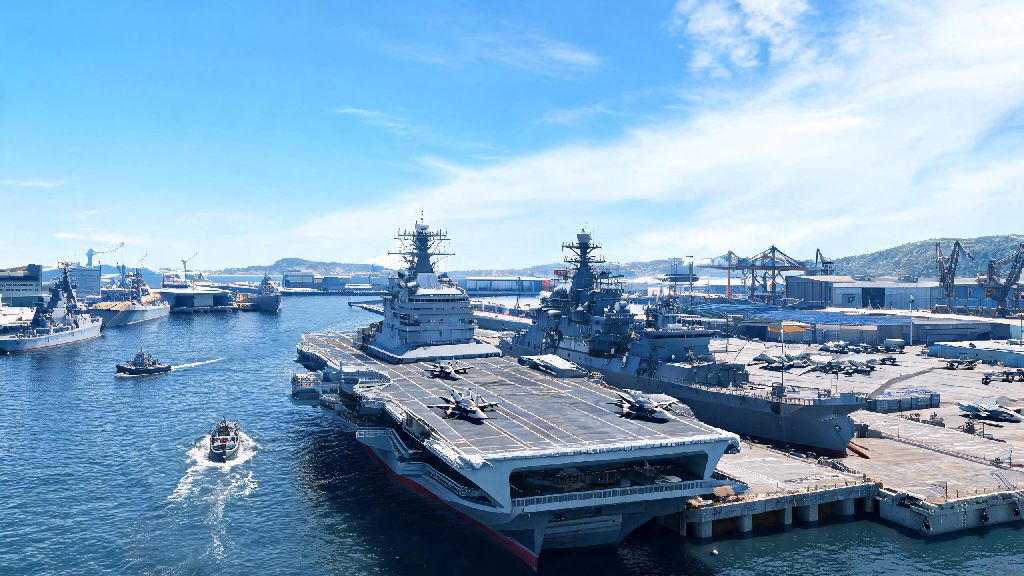
If you’ve spent any time scrolling through 2026 naval defense reports or military strategy forums, you’ve probably wondered what country still uses mini aircraft carriers in the world, and why these smaller, more affordable vessels haven’t been phased out entirely for larger, more powerful full-sized flattops. I’ve attended three naval defense expos in the first half of 2026, and I was surprised to see how much buzz mini carriers are getting, even as major powers like the U.S. and China continue to roll out 100,000-ton nuclear supercarriers. Most people assume carriers are only useful for large, global military powers, but that’s not the case at all for countries that focus on coastal defense and regional operations.
What Country Still Uses Mini Aircraft Carriers in the World in 2026?
The short answer is that Thailand operates the only purpose-built, fully commissioned mini aircraft carrier in active service as of 2026, the HTMS Chakri Naruebet. Launched in 1997, this 11,486-ton vessel has a maximum air wing capacity of 14 aircraft, including helicopters and short-takeoff vertical landing (STOVL) jets. It’s rarely used for combat missions these days, though; the Royal Thai Navy mostly deploys it for disaster relief, search and rescue operations, and coastal patrols in the Gulf of Thailand.
That said, several other countries operate multi-purpose amphibious assault ships that function as de facto mini aircraft carriers when configured for air operations. Spain’s Juan Carlos I, Australia’s Canberra-class ships, and Turkey’s TCG Anadolu all fall into this category, and they can carry anywhere from 8 to 12 STOVL jets or 20+ helicopters for various missions. Many naval analysts classify these as mini carrier equivalents, even if they have secondary well decks for amphibious landing craft.
You might be wondering why more countries don’t have purpose-built mini carriers. The main reason is that for most small navies, multi-purpose vessels make more financial sense, as they can handle both air operations and amphibious transport needs without requiring two separate ships.
Why Mini Aircraft Carriers Remain Relevant for 2026 Naval Operations
A lot of military commentators write off mini carriers as obsolete, but they fill a very specific niche that full-sized carriers can’t touch, especially for smaller countries with limited defense budgets. I talked to a representative from the Royal Thai Navy at the 2026 Singapore Maritime Defense Show, and he explained that their mini carrier is far more useful for their day-to-day operations than a supercarrier ever could be.
The core benefits of mini carriers over larger alternatives include:
For example, during the 2026 Southeast Asia tsunami response drill, the HTMS Chakri Naruebet was able to deliver 2,200 tons of aid to remote coastal villages in southern Thailand that were inaccessible to larger military ships. That’s the kind of use case that makes mini carriers worth the investment for many small nations.
Key Limitations of Mini Aircraft Carriers for 2026 Military Use
Mini carriers aren’t a perfect fit for every navy, though, and they have some clear drawbacks that make them unsuitable for countries with global military ambitions. The biggest limitation is their limited air wing capacity: even the largest mini carriers can only carry 10 to 15 fixed-wing aircraft, which is nowhere near enough to establish air superiority in a high-conflict zone against a well-armed opponent.
They also have far weaker defensive capabilities than full-sized carriers. Most mini carriers don’t have heavy armor, advanced anti-missile systems, or the support of a full carrier strike group, so they’re extremely vulnerable to attacks from submarines, anti-ship missiles, or enemy fighter jets. During the 2026 RIMPAC military exercises, the Thai mini carrier was “sunk” three separate times in simulated combat by opposing submarine forces, because it didn’t have enough escort ships to provide anti-submarine coverage.
Another issue is that most mini carriers can’t operate modern fifth-generation STOVL jets without expensive upgrades. The HTMS Chakri Naruebet, for example, was originally designed to carry second-generation AV-8S Harrier jets, which were retired in 2006, and it would cost more than $500 million to upgrade the deck and support systems to carry F-35B jets. That’s a cost the Thai government can’t justify for a ship that’s mostly used for disaster relief.
Future Plans for Mini Aircraft Carriers Beyond 2026
Mini carriers aren’t going away anytime soon, and in fact, we’re likely to see more countries adopt them over the next 10 years, thanks to advances in drone technology. Drone-compatible mini carriers are the biggest trend in 2026 naval development, because uncrewed aerial vehicles don’t require long runways, expensive pilot training, or large support crews, which solves many of the traditional limitations of mini carriers.
Turkey’s TCG Anadolu, for example, was reconfigured in 2025 to operate as a dedicated drone carrier, and as of 2026, it carries 12 TB3 combat drones and 6 reconnaissance drones, with plans to add 8 more attack drones by the end of the year. The total cost of modifying the ship and purchasing the full fleet of drones was less than $800 million, which is a fraction of the cost of purchasing a fleet of manned fighter jets for a traditional mini carrier.
Several Southeast Asian countries, including the Philippines and Malaysia, have also announced plans to purchase or build small drone carriers by 2030, as they look to expand their coastal surveillance capabilities without breaking their defense budgets. Even larger countries like Japan and South Korea are testing small drone carrier designs to complement their existing fleets of larger amphibious assault ships.
As 2026 naval defense trends continue to shift toward smaller, more versatile fleet assets, it’s clear that the answer to what country still uses mini aircraft carriers in the world isn’t just limited to one nation—more countries are exploring these vessels as a cost-effective alternative to larger, less flexible naval assets. Whether you’re a casual military enthusiast or someone studying global defense policy, it’s worth keeping an eye on mini carrier development over the next few years, as drone technology will likely make these small ships far more capable than they’ve ever been before. If you get a chance to visit a naval expo in the next year, you’ll almost certainly see new mini carrier designs on display from shipbuilders around the world.