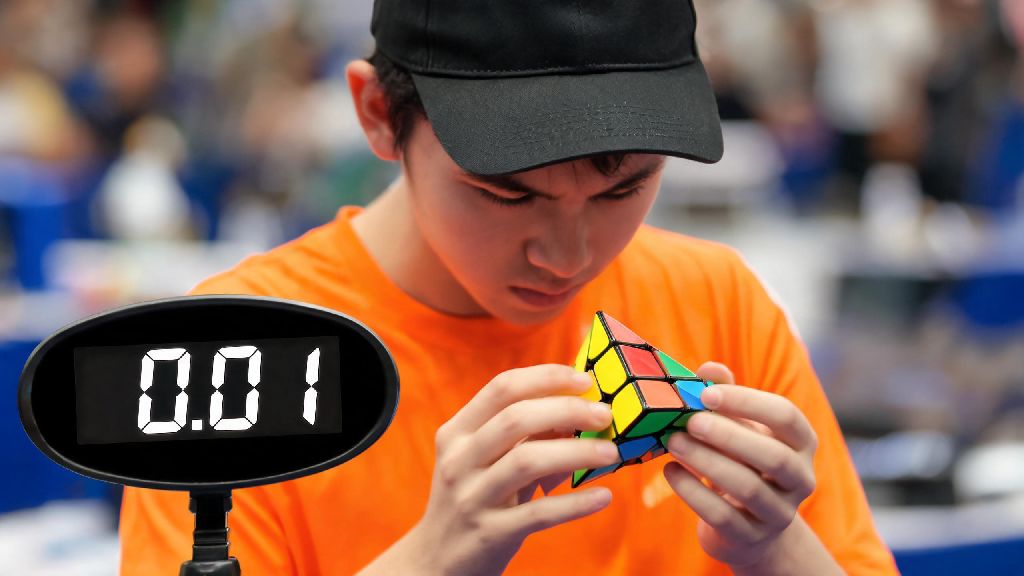
If you’ve ever fumbled through solving a tiny mini piraminx while waiting for coffee, waiting for a friend, or just killing time on your commute, you’ve probably wondered just how fast the best in the world can finish this tricky little twisty puzzle. What is the world record for the mini piraminx is a question that pops up all the time in speedcubing forums, local meetup groups, and comment sections of solve videos, and the answer might surprise you even if you’ve been solving twisty puzzles for years. Most casual solvers take 30 seconds to a minute to finish a mini piraminx, and even intermediate solvers often hover around the 5-10 second mark, but the top competitors have pushed that time down to a fraction of that, thanks to years of dedicated practice, smart technique tweaks, and even small customizations to their puzzles to fit their unique turning style.
Current Official World Record for the Mini Piraminx
As of the latest verified results from the global twisty puzzle governing body, the fastest single mini piraminx solve sits at 0.71 seconds, set by competitive speedcuber Leo Borromeo at an official event in the Philippines. The average of 5 solves record, which is widely considered a more accurate measure of consistent skill instead of one lucky attempt, is 1.08 seconds, set by Zayn Khanani at a regional competition in the United States. Both records are the result of thousands of hours of practice, not just random good luck, even if the solves look almost instantaneous to casual viewers. All official mini piraminx records are verified by the World Cube Association (WCA), which has over 20 years of experience regulating twisty puzzle competitions across more than 100 countries. The WCA uses strict rules for all events, including randomly generated scrambles, 15-second fixed inspection times, and independent judges to confirm no cheating occurs during solves. Many unofficial “records” circulate on social media, but only those listed on the WCA’s official website count as legitimate global records.
How Top Solvers Hit Record-Breaking Mini Piraminx Times
Most people assume that sub-1-second solves are only possible with extreme natural talent, but that’s far from the truth. Nearly every top mini piraminx solver has spent years building muscle memory, refining their finger tricks, and learning to recognize puzzle patterns in milliseconds. Many start with larger twisty puzzles like the standard 3x3 Rubik’s cube or full-size pyraminx before moving to the smaller mini piraminx, so they already have a strong foundation of solving skills to build on. Finger trick optimization is the single biggest factor that separates casual solvers from record holders for this tiny puzzle, because every extra movement adds precious milliseconds to your solve time. Most new solvers waste 2-3 seconds per solve just by rotating the whole puzzle in their hand instead of turning individual faces with their thumb and index finger. Top solvers follow a consistent set of daily habits to keep their skills sharp:
Common Misconceptions About Mini Piraminx World Records
There are a lot of false claims floating around about mini piraminx records, mostly from people who don’t follow competitive speedcubing closely. One of the most common misconceptions is that record solves are all luck, and anyone could hit that time if they get a simple enough scramble. That’s not true at all, because even with a 2-move scramble, you still have to recognize the pattern, plan your moves, and execute them without fumbling in less than a second. Luck accounts for less than 10% of a record-breaking solve, even for the smallest twisty puzzles. Another common myth is that you need a $100 custom puzzle to hit record times. Most top solvers use a standard $12 mass-produced mini piraminx, with just a few drops of silicone lubricant and minor tension adjustments to make turning smoother. You don’t need fancy equipment to get fast, you just need consistent practice. Many people also assume only teenagers can hit these fast times, because they have faster reflexes. While reflexes help, muscle memory and pattern recognition are far more important, and many solvers in their 30s and 40s have hit sub-2 second times in official competitions. If you see a “record” posted on social media that’s faster than the official WCA time, it’s almost certainly fake, either edited with sped-up footage or done with a pre-scrambled puzzle that wasn’t generated by the official WCA system.
Actionable Tips to Get Closer to Record Mini Piraminx Times
You don’t have to be a competitive speedcuber to cut seconds off your mini piraminx solve time. Even small tweaks to your routine can make a huge difference, no matter what your current skill level is. If you’re a brand new solver, start with the basic layer-by-layer method before you try to learn advanced algorithms. You don’t need to memorize dozens of complex moves until you can consistently solve the puzzle in under 5 seconds. Next, practice finger tricks for 5 minutes every day. Start by turning each face with only your thumb and index finger, without rotating the puzzle in your hand. It will feel awkward at first, but after a week you’ll notice your times drop significantly. Track your average of 5 solves instead of just focusing on single fast solves. A single fast solve might be luck, but a consistent average shows you’re actually improving your skills long term. Even cutting half a second off your inspection time can drop your average solve time by a full second or more, so don’t skip practicing that part of the process. Most new solvers waste inspection time just staring at the puzzle, but you can use that 15-second window to plan your first 3-4 moves before you even touch the puzzle. If you do want to enter official competitions, start with small local events first to get used to the pressure of solving in front of judges and other competitors. Many first-time competitors add 1-2 seconds to their average just from nerves, so getting used to the competition environment is a big part of improving your times for official events.
At the end of the day, even if you never plan to enter a formal speedcubing competition, knowing what is the world record for the mini piraminx can give you a fun goal to work toward as you practice. You don’t have to hit sub-1-second solves to get value out of the hobby, even cutting a few seconds off your personal best is a huge win that’s worth celebrating. The mini piraminx is one of the most accessible twisty puzzles on the market, it’s cheap, small enough to carry in your pocket, and easy to learn even if you’ve never solved a Rubik’s cube before. If you do want to push for a personal best or even a local competition record, start with the tips we shared above, practice consistently, and don’t forget to have fun with the process along the way. You might be surprised how fast you can get with just a few weeks of focused practice.