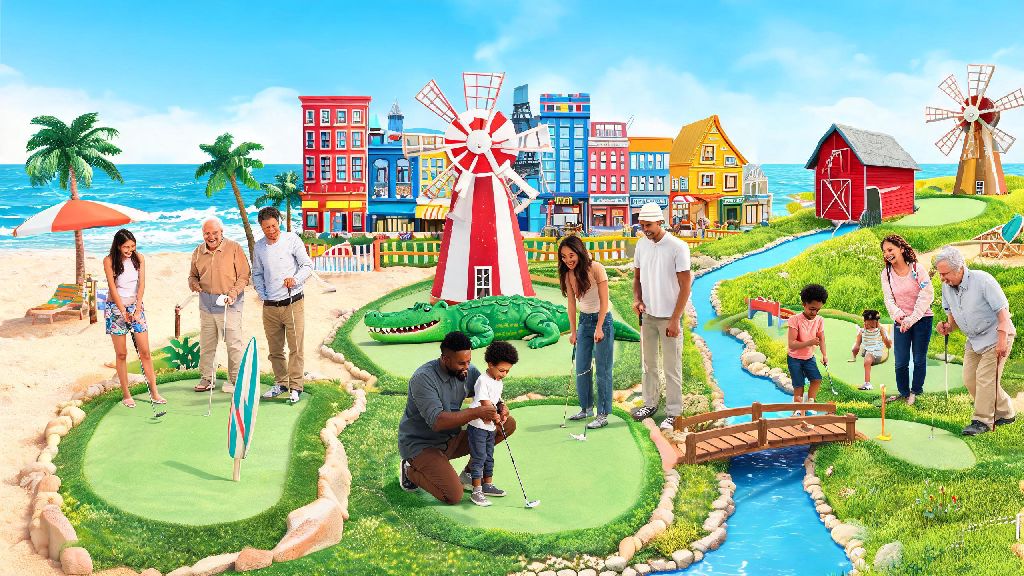
If you’ve ever spent a sunny afternoon laughing through a windmill obstacle or arguing over whether your ball really did bounce off the alligator statue, you know mini golf is one of the most low-stakes, fun group activities out there. It’s popular with kids, date night couples, and competitive amateur players alike, and courses pop up everywhere from coastal boardwalks to small town main streets. If you’ve ever wondered who has the most mini golf courses in the world, you’re not alone – we dug through industry data, player surveys, and local tourism reports to get the full, surprising answer. We also pulled in extra details about why certain regions dominate the mini golf space, what makes their courses unique, and how you can cross the most iconic spots off your bucket list.
Who Has the Most Mini Golf Courses in the World, Exactly?
If you’re asking who has the most mini golf courses in the world, the numbers don’t lie – the U.S. holds the top spot by an enormous margin. As of the latest industry count, there are roughly 5,200 operating mini golf courses across the U.S., more than the next three highest countries combined. The next closest is the United Kingdom, with around 800 courses, followed by Canada with 650, and Australia with just over 400. That means nearly 60% of all mini golf courses on the planet are located in the U.S.
But it’s not evenly spread across the country, of course. The highest concentration is in Florida, which hosts over 600 courses on its own, thanks to year-round warm weather and a massive tourist industry. Myrtle Beach, South Carolina, is often called the mini golf capital of the world, with more than 100 courses within a 20-mile radius of the coastal city. If you’re a casual fan, you might not realize just how much of the mini golf industry is centered in the U.S. – even the sport’s competitive governing body, the World MiniGolf Sport Federation, has more registered U.S. players than any other country, and most international professional tournaments are held in U.S. locations at least once every two years.
Why Does the U.S. Have More Mini Golf Courses Than Any Other Country?
Part of the reason the U.S. dominates the mini golf space comes down to the sport’s origins. While early versions of obstacle golf existed in Europe in the late 1800s, the modern, accessible mini golf format we know today was invented in the U.S. in the 1910s, and it boomed in popularity during the 1920s as a low-cost entertainment option for people of all ages. But that’s not the only factor. Other key reasons for the U.S.’s lead include:
That doesn’t mean other countries don’t have thriving mini golf scenes, of course. Scandinavian countries have a huge number of indoor, year-round courses for their long cold winters, and Japan has a growing number of themed courses tied to anime and pop culture franchises. But none have been able to match the U.S.’s sheer volume, thanks to that perfect mix of history, climate, and market demand. I’ve visited mini golf courses in 12 different countries over the last 10 years, and the U.S. is still the only place I’ve found courses attached to everything from gas stations to shopping mall food courts.
What Makes U.S. Mini Golf Courses Stand Out From Global Options?
If you’ve played mini golf outside the U.S., you’ve probably noticed that most international courses are far more focused on competitive play, with flat surfaces and simple obstacles designed for consistent scoring. U.S. courses, by contrast, are almost entirely built for casual fun, with over-the-top themes and wild obstacles that have almost nothing to do with actual golf skill. Some of the most popular themes you’ll find across U.S. courses include pirate adventures, space exploration, dinosaur habitats, and even local historical events.
Many U.S. courses also include extra perks like on-site ice cream shops, arcade games, and even laser tag attractions to turn a 45-minute round into a full family outing. That focus on entertainment over competition is a big part of why the format has stayed so popular in the U.S. for more than a century. Even competitive players in the U.S. often play on casual themed courses for fun, unlike European players who almost exclusively practice on standardized competitive courses. There’s no right or wrong approach, of course, but it’s easy to see why the U.S. format is more appealing to casual players who just want to have a good time, rather than practice for a tournament. I once played a course in Wisconsin that was themed around 1990s sitcoms, with holes designed after the Friends couch and the Full House porch – it was goofy, a little tacky, and one of the most fun rounds I’ve ever played, even though I scored 12 over par. Even with more countries building new courses every year, it’s unlikely any will catch up to who has the most mini golf courses in the world any time soon.
Tips for Planning a Mini Golf Road Trip Across Top U.S. Destinations
If you’re a mini golf fan who wants to see as many of these iconic courses as possible, a road trip through the U.S.’s top mini golf regions is one of the most fun vacations you can plan. You don’t need to be a competitive player to enjoy it, and you can tailor the trip to fit any budget. Keep these tips in mind as you plan to make the most of your time.
First, prioritize visiting between March and October if you’re sticking to northern regions, or stick to southern states like Florida and Arizona between November and February to avoid crowds and extreme heat. Most outdoor courses close for the winter in states with heavy snow, so you don’t want to show up to a closed course you’ve been looking forward to playing. Second, look for package deals at popular tourist destinations. Myrtle Beach, for example, sells multi-course passes that let you play 5 or 10 different courses for half the price of paying per round, and many passes include free snacks or arcade credits.
Third, don’t sleep on small, local courses in small towns. Some of the most creative, well-maintained courses I’ve ever played were in tiny towns with less than 10,000 people, run by local families who’ve owned them for generations. They often have more unique, personal touches than the big corporate-owned courses in major tourist areas. Finally, don’t forget to check for special events like glow-in-the-dark night rounds, holiday themed courses, or amateur tournaments that might be happening during your trip. These events are a great way to meet other mini golf fans and make the experience even more memorable. You don’t need any special gear to play, just comfortable shoes and a willingness to laugh off bad shots.
Mini golf is one of the few activities that’s equally fun for 7-year-olds, 27-year-olds on a date, and 70-year-olds looking for a low-key afternoon out, so it’s no surprise it’s popular all over the world. Now that you know who has the most mini golf courses in the world, you can start planning your own trip to explore some of the most creative, goofy, and fun courses on the planet. Whether you stick to local courses near your home or plan a cross-country road trip to hit all the iconic spots, the best part of the sport is that there’s no pressure to play well – you just get to have fun with the people you’re with. Next time you’re looking for a low-effort activity for a group, skip the movie theater and head to your local mini golf course – you might just find a new favorite hobby.